This post has been a long time coming. For many years - most of my life - I could never understand opposition to the Olympics that would occasionally make the headlines. "Who were these fun-hating killjoys?" I would wonder.
"Bread NOT Circuses" one group called itself, opposing the Toronto bid for the 2008 Summer Games. Succinct enough, but the logical argument was not one human beings can practically live by - there will always be hungry people; for most people, this isn't a good enough reason to stop having fun.
Even if that weren't the case, how could you be against the "Olympic Movement"? A "movement" (for that is what all of its proponents, from Wayne Gretzky to the people running VanOC, like to call it) that sought to bring people together in the spirit of cameraderie and sportsmanship, in the hopes that perhaps, through healthy competition, we could all eventually see one another as human beings.
What could be more idealistic?
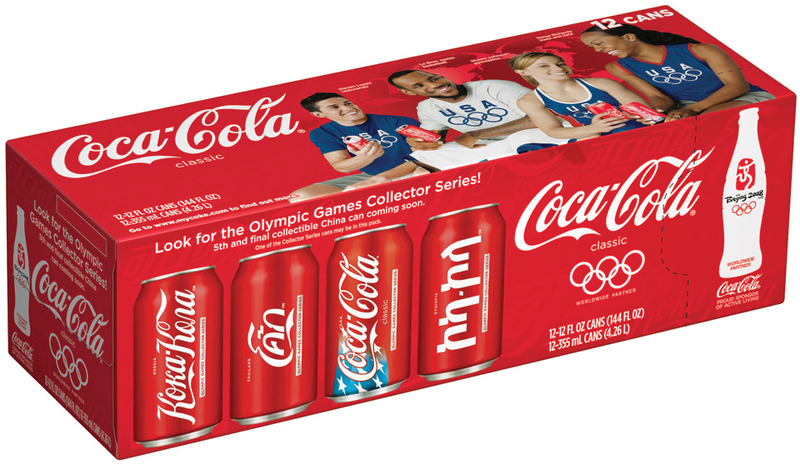
Coca-Cola certainly doesn't object.
Still, negative consequences have been hard to cover up - as I noted before here, cities that hold the Olympics have this strange penchant to become extremely conscious of homelessness in the lead up to the games. Not concerned enough to actually do something to address the problems, but concerned enough to try to lock up all those unsightly vagabonds.
The marketing campaign that precedes any Olympics is a great example of yet another public-private partnership. The public's part of the partnership involves taking all of the risks for the sake of that warm and fuzzy feeling conferred by "the movement" while the private end of the bargain involves taking home all of the profits. The Olympic Torch relay epitomizes this, with cities and local police departments preparing the way for the Olympic relay, covered by all the of the major news outlets with an overwhelmingly positive tone. So when the torch relay was disrupted in Espanola, Ontario, my reaction to the protesters turned from disdain at the killjoys to a mild sympathy for their cause.
So what exactly were their grievances?
Like all aggregations of leftists, anarchists, associated activists - the DFH set, as they are known (I will not provide the expansion of that acronym here) - they are manifold.
One of the protest websites, no2010.com makes its primary objection fairly clear in its banner - that the Olympic venues have been built on land that is subject to unsettled land claims. In the words of the activists, "stolen land," and not in the sense that all colonial countries are on stolen land, but in the sense that Israeli colonies built on confiscated land are on "stolen land." Just because time has elapsed since the crime was committed does not make it any less of a crime.
Of more relevance to the residents of Vancouver, however, is the pressure on the homeless, not only from draconian new laws, but from the explosion in property speculation that the Games have brought. A fairly detailed report on this can be found here. With rising rents, more and more people have been moving into the city's notorious Downtown East Side (DTES), currently the poorest urban postal code in Canada and the North American epicentre of injection drug use and HIV infection. The homeless population is thought to have doubled. The Games cannot have been good for everyone.
I had the opportunity to visit Vancouver a few weeks ago on business - nothing too long, just a night and a day. Riding the new "Canada Line" train from the airport, and passing the large neon olympic logo that glowed gaudily in the night, I didn't expect to see many signs of opposition. The next day, though, at a bus shelter near my "Olympic Partner" hotel (a Best Western on the outskirts of downtown - I myself am not made of money) there it was - a satirical poster of the 3 Vancouver Olympic mascots, except that the very talented artist had drawn menacing expressions on their faces, the larger two with their fists clenched, the smaller one tapping the Vancouver 2010 Olympic torch in the palm of his other hand like a gangster would do with a baseball bat while approaching some sorry debtor.
The little people of Vancouver had a sense of humour. And I wasn't even in the DTES.
The Olympics in Vancouver will not make money (certainly not after they've had to truck in all that snow to compensate for the generally un-Canadian weather). The VanOC's own budget is based on a break-even model, which would be fair enough if that didn't almost always imply a large debt.
Most of the arguments in favour of holding the games are rubbish. If the public won't make any money from the games, then it isn't true to say that Vancouver owes its transportation improvements to them, except in the political sense where the games provided an excuse for reticent city councillors and provincial government officials to provide the funds for them. The games might attract attention to the problems of drug use, HIV, and homelessness, but if they do, it will in spite of the organisers' best efforts, not because of them. Before the games, the IOC people were taken on a circuitous route through the city to avoid the DTES. During the games, VanOC has created various ways to mitigate, hide, or downplay the impact that they have had on the city's poorest people. After the games are over, the world will have little reason to remember Vancouver again, or at least, little reason to remember the city's problems.
So when you watch the opening ceremonies this weekend, or take in the various spectacles, remember that what you are watching is only incidentally a celebration of athleticism, and that some unlucky people most likely were confronted with another bout of misfortune for the sake of your entertainment.
And remember that Coca-Cola certainly isn't complaining.