"I feel a lot of respect and empathy [for] Mubarak. He was an important leader for his country, I believe he enjoyed the respect of many Egyptians," Barak said, adding that Mubarak was "quite successful, under the circumstances" in dealing with Egypt's many challenges.
-- Israeli Defense Minister Ehud Barak, speaking to CNN.
Thursday, February 24, 2011
Evil or stupid?
Sunday, February 13, 2011
Subjects of History
January was a historic month for Egypt and her neighbours. On the far side of Libya, Ben-Ali was tossed out by the popular uprising that inspired Egypt's own. To the south, Sudan may finally know a lasting peace. All the while, the monarchs of the Arab world and the Israelis are watching nervously, seeing their cherished stability unravel in the face of popular sentiment that loathes the injustice necessitated by that stability.
We in the West are used to thinking of Muslims, and particularly the Arabs, as the objects of history. They are like surgery patients, lying paralysed on the operating table, waiting for people with power to do various things to them - usually without anaesthetic. They may have opinions, but they do not matter, because those opinions are rarely rational, and generally dangerous. Edward Said only wounded Orientalism. He did not kill it.
As many have pointed out, including a few of the Middle East's wiser observers and denizens, the danger remains that it will be the Egyptian military leadership, and not the people of Egypt, who will determine the nature of the new order. As the formidable Robert Fisk wrote:
. . . the future body politic of Egypt lies with up to a hundred officers, their old fidelity to Mubarak – sorely tested by Thursday's appalling speech, let alone the revolution on the streets – has now been totally abandoned. A military communiqué yesterday morning called for "free and fair elections", adding that Egyptian armed forces were "committed to the demands of the people" who should "resume a normal way of life". Translated into civilian-speak, this means that the revolutionaries should pack up while a coterie of generals divide up the ministries of a new government. In some countries, this is called a "coup d'etat".Fisk, however, for all his decades of experience living and working in the Arab world, didn't predict the uprising to begin with - to my knowledge, no one did - and so we can hold out some hope that his grimmer instincts may yet prove wrong.
No matter what happens from here, though, the precedent has been set, and the principle established. Kings and generals may have power and influence, but the final say goes to the population, if they all want the same thing badly enough. They are no longer passive objects, but active participants in their own history. They have an opinion, and it matters.
Saturday, February 5, 2011
Thursday, January 27, 2011
A Change Gonna Come
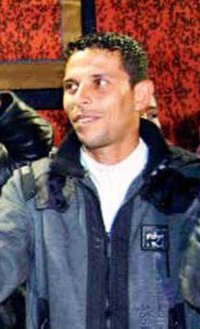
At the end of his 26 years in this world, Mohammed Bouazizi doused himself in solvents and set himself ablaze, and died of his burns 3 weeks later. Did he have an inkling of the fire that his own self-immolation would spark?
As I write this, people are waking up for Fajr prayer in Cairo. There are massive demonstrations planned after Jumah prayers. As my previous post demonstrates, I tend to be conservative in my predictions - I tend to bet on things staying the same, because that has been, in my experience, the safe bet.
I'm going to revise that prediction now. Many of the dictators of the Arab world are finding themselves backed into corners, particularly in Egypt and Yemen, but also in Jordan, Algeria, and probably also Libya. When they heard of what happened in Tunisia, some Libyan associates of mine seemed uncharacteristically ecstatic, especially given their typical reticence to discuss politics.
I don't know if Mubarak will fall tomorrow. Even if he does fall, I don't know if he won't just be replaced by one of his current associates, an opportunist who sees that the old man isn't going to get any younger anyways.
It does seem apparent, at this point, though, that a sea-change has taken place in the world of Arab presidents-for-life - the pseudo-monarchs who don't call themselves kings, but nevertheless rule as despots and groom their own family members to take power when they retire or die. An Arab president has been forced to leave office against his will, and that does set a precedent. If it didn't, the streets of Cairo and Sana would not have thronged so.
There is also a tremendous irony, that the American rhetoric about bringing about a flowering of democracy to the Middle East has proven so empty. They, along with the British, French, and Israelis, have been publicly professing a desire to free the people of the Middle East, all the while building stronger and harsher cages for them, frightened of the reckoning that would come if their prisoners ever got loose. Yet a vegetable seller with a can of paint-thinner has accomplished far more than the entire might of the US military-industrial complex could have, even if it had been honourable in its intentions.
I pray, and I urge anyone reading this to do the same, that the demonstrators are successful in influencing their governments in a meaningful, permanent way. I fear, though, that Mubarak in particular won't allow that to happen. Something big will happen, but if the security forces cooperate (and I pray they won't) the response could be extreme, designed to make an example of the poor earnest souls who will take to the streets in a few hours.
Either way, I don't think that the sparks lit by Mohammed Bouazizi will fizzle without something dramatic happening.
Sunday, June 7, 2009
What wasn't seen when Mr. Obama went to Cairo
Another astute article from the fantastic Robert Fisk:
A glimpse of Obama in a Cairo emptied of its people and its poor
It seems like an almost universal phenomenon in this age - when foreign dignitaries come to visit, the local population is held away by fences and riot police at a tremendous distance, to save the guests the offence of having to see them.
Or in Obama's case, to keep at bay any reminder that the men he embraces torture their subjects at his own government's behest.
The POTUS wasn't being protected from danger, I was sure. He was being protected from the words these Egyptians might utter, from their views of the Arab world, of Egypt, from their views, perhaps, on the nature of democracy amid all these cops and security lads. They might have spoken of corruption and nepotism and violence. But the POTUS never saw them. Anyway, he had too tight a schedule: there were words to utter across town, about human rights and justice in what he called "the timeless city of Cairo". Timeless yes. And its people silent.