Showing posts with label democracy. Show all posts

Monday, May 2, 2011

60% of us didn't want it

But we got it anyways.

Now, we are in the uncomfortable position of praying that we were wrong about the implications of a Konservative majority.

. . . Or that whatever damage is done to this country and its institutions over the course of the next 4 years can be repaired as quickly.

Stumble Upon Toolbar

Sunday, March 20, 2011

Failing to resist


So the die is now cast. The UNSC has voted, and it has voted for war against Gaddafi - that is, after all, what this is. This isn't a "no-fly" zone - as the resolution itself says, it's an authorization to use military force to protect civilians; and if a few civilians get killed along the way, so be it. Allied forces are claiming that there have been no civilian casualties from all the missile strikes and bombings. I don't believe them.

Some intelligent arguments have been made over the last 2 days by people who are less than thrilled about this. They argue that the motivations of those involved in the airstrikes (the usual suspects) are less than pure, and that very similar action against Saddam Hussein in 1991 led to a 12-year stalemate in which millions of civilians were killed, and the relative strength of the regime against its opponents on the ground provided one of the myriad excuses for the 2003 invasion and occupation of the country.

These are not baseless arguments. The Americans, British, French, Italians, and yes, Canadians too, likely do not have purely humanitarian concerns at heart. The question is, exactly who does? The argument that Western governments will be condemned no matter what they do isn't entirely hollow - if America had sat by and let Benghazi fall, I know lots of people who would have said it was because they privileged Libya's oil supplies over its people.

The missing question in all this debate is "Where are the Arabs?" For sure, most of their leaders actually have no interest in seeing the rebellion against Gaddafi succeed - as current events in Bahrain demontrate (another place where you won't see the Americans leaping to the defence of civilians, despite having a base on the island). It was heartening for sure to see the Arab league demanding action to reign in one of their own colleagues. It was equally disheartening to see them doing absolutely nothing about him themselves.

The ever-plaintiff Amr Moussa, secretary general of the Arab League, was among the first to complain when the bombs and missiles started hitting Libya, as if he had expected something different. Moussa, an Egyptian, is himself now a favourite to win Egyptian presidential elections, and a former Egyptian foreign minister.

And where has Egypt been all these days, exactly? One might imagine that post-Mubarak Egypt migh have a bit more interest in helping to - at the very least - stabilise the situation in neighbouring Libya. It certainly has the wherewithal: Egypts armed forces are, after the IDF, the most well-armed in the Middle East, receiving $1.3 billion in military aid from Washington each year, and with an army and air force that are more technologically advanced than anything Libya has to put on the field.

Yet Egypt sits on its hands, it's leaders pining away (at least, publicly) for London, Paris, and Washington to come and save the Arabs from one another.

And so the Arabs continue to receive the treatment reserved for those who cannot take care of themselves - to be continually taken advantage of by those with the means to forward their own interests. This situation will not change until the Arabs choose to change it. That process started in January with the people of Tunisia. Time will tell whether they succeed. Western intervention in Libya is, however, another example of the Arab failure to resist.

Stumble Upon Toolbar

Tuesday, March 15, 2011

Say it with a smile


There's been a lot to watch in the world this week, and a lot I have wanted to say - not just about the history being made all over the Arab world, but about other things closer to home. For now, I just wanted to highlight this photo from the Independent, of protesters in Bahrain.

Stumble Upon Toolbar

Thursday, February 24, 2011

Evil or stupid?

"I feel a lot of respect and empathy [for] Mubarak. He was an important leader for his country, I believe he enjoyed the respect of many Egyptians," Barak said, adding that Mubarak was "quite successful, under the circumstances" in dealing with Egypt's many challenges.

-- Israeli Defense Minister Ehud Barak, speaking to CNN.

Stumble Upon Toolbar

Sunday, February 13, 2011

Subjects of History

January was a historic month for Egypt and her neighbours. On the far side of Libya, Ben-Ali was tossed out by the popular uprising that inspired Egypt's own. To the south, Sudan may finally know a lasting peace. All the while, the monarchs of the Arab world and the Israelis are watching nervously, seeing their cherished stability unravel in the face of popular sentiment that loathes the injustice necessitated by that stability.

We in the West are used to thinking of Muslims, and particularly the Arabs, as the objects of history. They are like surgery patients, lying paralysed on the operating table, waiting for people with power to do various things to them - usually without anaesthetic. They may have opinions, but they do not matter, because those opinions are rarely rational, and generally dangerous. Edward Said only wounded Orientalism. He did not kill it.

As many have pointed out, including a few of the Middle East's wiser observers and denizens, the danger remains that it will be the Egyptian military leadership, and not the people of Egypt, who will determine the nature of the new order. As the formidable Robert Fisk wrote:

. . . the future body politic of Egypt lies with up to a hundred officers, their old fidelity to Mubarak – sorely tested by Thursday's appalling speech, let alone the revolution on the streets – has now been totally abandoned. A military communiqué yesterday morning called for "free and fair elections", adding that Egyptian armed forces were "committed to the demands of the people" who should "resume a normal way of life". Translated into civilian-speak, this means that the revolutionaries should pack up while a coterie of generals divide up the ministries of a new government. In some countries, this is called a "coup d'etat".
Fisk, however, for all his decades of experience living and working in the Arab world, didn't predict the uprising to begin with - to my knowledge, no one did - and so we can hold out some hope that his grimmer instincts may yet prove wrong.

No matter what happens from here, though, the precedent has been set, and the principle established. Kings and generals may have power and influence, but the final say goes to the population, if they all want the same thing badly enough. They are no longer passive objects, but active participants in their own history. They have an opinion, and it matters.

Stumble Upon Toolbar

Saturday, February 5, 2011

Blocking the tanks in Tahrir Square

Stumble Upon Toolbar

Thursday, January 27, 2011

A Change Gonna Come

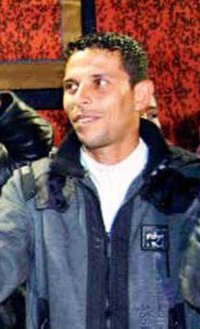
Mohammed Bouazizi, 1984-2011

At the end of his 26 years in this world, Mohammed Bouazizi doused himself in solvents and set himself ablaze, and died of his burns 3 weeks later. Did he have an inkling of the fire that his own self-immolation would spark?

As I write this, people are waking up for Fajr prayer in Cairo. There are massive demonstrations planned after Jumah prayers. As my previous post demonstrates, I tend to be conservative in my predictions - I tend to bet on things staying the same, because that has been, in my experience, the safe bet.

I'm going to revise that prediction now. Many of the dictators of the Arab world are finding themselves backed into corners, particularly in Egypt and Yemen, but also in Jordan, Algeria, and probably also Libya. When they heard of what happened in Tunisia, some Libyan associates of mine seemed uncharacteristically ecstatic, especially given their typical reticence to discuss politics.

I don't know if Mubarak will fall tomorrow. Even if he does fall, I don't know if he won't just be replaced by one of his current associates, an opportunist who sees that the old man isn't going to get any younger anyways.

It does seem apparent, at this point, though, that a sea-change has taken place in the world of Arab presidents-for-life - the pseudo-monarchs who don't call themselves kings, but nevertheless rule as despots and groom their own family members to take power when they retire or die. An Arab president has been forced to leave office against his will, and that does set a precedent. If it didn't, the streets of Cairo and Sana would not have thronged so.

There is also a tremendous irony, that the American rhetoric about bringing about a flowering of democracy to the Middle East has proven so empty. They, along with the British, French, and Israelis, have been publicly professing a desire to free the people of the Middle East, all the while building stronger and harsher cages for them, frightened of the reckoning that would come if their prisoners ever got loose. Yet a vegetable seller with a can of paint-thinner has accomplished far more than the entire might of the US military-industrial complex could have, even if it had been honourable in its intentions.

I pray, and I urge anyone reading this to do the same, that the demonstrators are successful in influencing their governments in a meaningful, permanent way. I fear, though, that Mubarak in particular won't allow that to happen. Something big will happen, but if the security forces cooperate (and I pray they won't) the response could be extreme, designed to make an example of the poor earnest souls who will take to the streets in a few hours.

Either way, I don't think that the sparks lit by Mohammed Bouazizi will fizzle without something dramatic happening.

Stumble Upon Toolbar

Tuesday, June 29, 2010

The slow death of Canadian democracy

Before what happened in Montebello , I thought that Canada was a country where the police actually care about public security, and did not engage in deceit and brutality in order to suppress and subvert political opposition and democratic debate. The sight of police posing as protesters, however, and then visibly making mischief unrelated to any political cause, gave me serious misgivings.

Seeing images like this from the G20 in Toronto only deepens my worries:


It's gotten so bad that even the even-handed Steve Paikin, TVO's scion of neutrality, has become uncharacteristically vocal about it.

We have a wonderful history of peaceful democratic protest in this city. But democracy took a major step backwards this weekend. And many will have to answer for that.

Stumble Upon Toolbar