Thursday, January 27, 2011

A Change Gonna Come

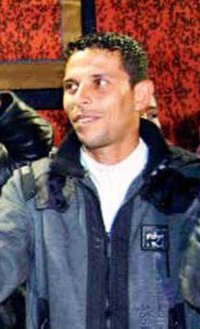
Mohammed Bouazizi, 1984-2011

At the end of his 26 years in this world, Mohammed Bouazizi doused himself in solvents and set himself ablaze, and died of his burns 3 weeks later. Did he have an inkling of the fire that his own self-immolation would spark?

As I write this, people are waking up for Fajr prayer in Cairo. There are massive demonstrations planned after Jumah prayers. As my previous post demonstrates, I tend to be conservative in my predictions - I tend to bet on things staying the same, because that has been, in my experience, the safe bet.

I'm going to revise that prediction now. Many of the dictators of the Arab world are finding themselves backed into corners, particularly in Egypt and Yemen, but also in Jordan, Algeria, and probably also Libya. When they heard of what happened in Tunisia, some Libyan associates of mine seemed uncharacteristically ecstatic, especially given their typical reticence to discuss politics.

I don't know if Mubarak will fall tomorrow. Even if he does fall, I don't know if he won't just be replaced by one of his current associates, an opportunist who sees that the old man isn't going to get any younger anyways.

It does seem apparent, at this point, though, that a sea-change has taken place in the world of Arab presidents-for-life - the pseudo-monarchs who don't call themselves kings, but nevertheless rule as despots and groom their own family members to take power when they retire or die. An Arab president has been forced to leave office against his will, and that does set a precedent. If it didn't, the streets of Cairo and Sana would not have thronged so.

There is also a tremendous irony, that the American rhetoric about bringing about a flowering of democracy to the Middle East has proven so empty. They, along with the British, French, and Israelis, have been publicly professing a desire to free the people of the Middle East, all the while building stronger and harsher cages for them, frightened of the reckoning that would come if their prisoners ever got loose. Yet a vegetable seller with a can of paint-thinner has accomplished far more than the entire might of the US military-industrial complex could have, even if it had been honourable in its intentions.

I pray, and I urge anyone reading this to do the same, that the demonstrators are successful in influencing their governments in a meaningful, permanent way. I fear, though, that Mubarak in particular won't allow that to happen. Something big will happen, but if the security forces cooperate (and I pray they won't) the response could be extreme, designed to make an example of the poor earnest souls who will take to the streets in a few hours.

Either way, I don't think that the sparks lit by Mohammed Bouazizi will fizzle without something dramatic happening.

Stumble Upon Toolbar

Sunday, January 23, 2011

Tunisia

I have had a lot of thoughts about what happened recently in Tunisia, and people who are familiar with the politics of the Arab world all wondering aloud "Will this spread?" Maybe, but not soon, is my guess. At any rate, Maher Arar wrote this very insightful piece for the Globe and Mail. While I'm mildly upset at the title, and the linguistic trap it perpetuates, it's still worth a read.

. . . The White House remained quiet about the situation in Tunisia almost until the end, although police had by then killed dozens of peaceful protesters. It wasn’t until Mr. Ben Ali was over the Mediterranean that Mr. Obama applauded “the courage and dignity of the Tunisian people.” This face-saving statement came just two days after Secretary of State Hillary Clinton indicated that Washington was not taking sides.

The French position was similar, although with the twist that Nicolas Sarkozy’s government offered to send anti-riot police to help crush the uprising. After learning that Mr. Ben Ali had fled, Mr. Sarkozy had a change of heart, refusing French residency to the dictator. . . .

Stumble Upon Toolbar

Wednesday, January 5, 2011

The Phantom Menace

While I frequently deride the Ottawa Citizen for being the looney bin of the Postmedia newspaper empire (formerly the CanWest media empire, before the company brightened my day by going broke), it has to be said that a glimmer of sanity is occasionally seen from the paper, despite its propensity for American-style wingnuttery.

While the wording of this piece by Dan Gardner is occasionally unfortunate (as I discussed in this post from 2008), the diction doesn't negate the importance of the point he makes. Nor does it make his shots at professional bedwetter Mark Steyn any less delicious.

Anyhow, here is the article.

Stumble Upon Toolbar

Sunday, December 26, 2010

Review: Images of Muhammad


If it wasn't already widely known in the Western world that Muslims were vehemently iconoclastic, it certainly must be by now, given the violent reaction in many majority-Muslim countries to, among other flare-ups, the Danish cartoons affair. The iconoclasm, both literal and figurative, that is taken as part and parcel of Islam does not, however, mean that Muslims do not create images of their prophets. We just don't create visual depictions of them. As Palestinian scholar Tarif Khalidi shows in a well-researched, 303-page volume, textual depictions of Muhammad (peace and blessings upon him) have been in constant development in the Muslim world ever since the first known biographies of the Prophet were penned in the latter 8th century.

Khalidi, being first and foremost a historian, seeks to catalogue all of the sources from which Muhammad's life can be viewed, including nearly 14 centuries of Sira (prophetic biography) literature through the course of the book, noting along the way the cultural and geopolitical forces that shaped the portrayal of the life of the last Prophet. Throughout this book, Khalidi's own views on the Prophet himself are kept at a generous distance - only occasionally do we get a sense of which of biographers he was more or less sympathetic towards.

While the book is panoramic and spans over a millenium of literature, two Khalidi does a particularly excellent job with two topics: 1) Controversial reports in the Sira and 2) The diversity of opinion on Muhammad's life, prophethood, and message that has existed within Muslim societies.

Thanks to Salman Rushdie (or perhaps, more approriately, the Islamic Republic of Iran's reaction to Salman Rushdie), a famous example of the first is the episode of the so-called Satanic verses, a report found in the Sira in which Muhammad ostensibly recited a verse negating the Islamic teaching of tawheed (unadulterated monotheism) for the Meccan leaders, and then recanted it, saying was from Satan. Examining the writings of the earliest scholars of the Sira, Khalidi explores the mindset and sense of purpose that let them to adopt an inclusive approach to reports - even reports that were unflattering to a subject whome they revered. Unlike the scholars of Hadith (prophetic narrations), the early Sira was written by men more concerned with completeness than with accuracy, more occupied with preservation than with filtering.

The diversity of thought on Muhammad is highlighted throughout the book. We see Muhammad taken up in the cause of traditionalists, rationalists, poets, and lawyers. We see the evolution of the Sunni view of Muhammad as the Perfect Man, and the Shi'a view of Muhammad as the progenitor of a holy family. Refreshingly, the view of Muhammad in Islamic apologetics, a subject that seems to consume so many Muslim intellectuals to the point of paralysis, is put into perspective, and treated with a calm clarity of thought not seen elsewhere.

Anyone interested in the intellectual history of the Muslim world should read this book.

Stumble Upon Toolbar

Saturday, December 11, 2010

The wisdom of old men

Rabbi Steinman, 96

. . . A source that was present at the scene said, "As soon as Rabbi Shmuel Eliyahu introduced himself, Rabbi Steinman, who knew why he was being approached, said 'I won't sign,' and immediately left the room.". . .

One of Steinman's confidants related the rabbi's words to Haaretz: "They are making a fierce nationalistic statement. We will not irritate others, that is not the Haredi way. There are things that should not be done; what if there would be a similar call in Berlin against renting properties to Jews? Where is the public conscience? What will this do to Jews around the world? We must act responsibly.". . .

Emphasis mine.

Stumble Upon Toolbar

Sunday, November 28, 2010

Yet another moron . . .

http://www.bbc.co.uk/news/world-us-canada-11852953

The plot was actually hatched by FBI agents, the device was a fake, and the only person in the USA sincerely involved with (allegedly) trying to kill anyone was a like a villain in a Loony Toons episode.

Which, even if we take the FBI story as gospel truth, only further demonstrates the well-established pattern: that the only people currently trying to hurt Americans are people who are not very smart.

Scanning every crotch at the airport probably does little to contribute to their downfall. They do most of the work themselves.

Stumble Upon Toolbar

Thursday, November 11, 2010

For Omar Khadr

We spent our youths in such different ways.

When I was sleepy from staying up late,
You were half-mad from sleep deprivation,
When I was being interviewed,
You were being interrogated,
When I was threatened with failure,
You were threatened with rape,
When I had clever words,
You had tears,
When I was kicked,
You were shot.

When I complained about my government,
About a search here and a frisking there.
You were betrayed by that government,
Its treason against you:
That it had sworn never to let a child,
Be treated like a soldier.

"He's not a soldier!"
Said their sages,
"So his deeds are a crime,
And he deserves no protection."

"He did it on the battlefield"
Said the same,
"So we will not try him,
As a civilian.

Or even as a human being."

When I lashed out in anger,
At the bare-handed boy,
They called it "self-defense."

When you struck out in fear,
At the armed soldier,
They called it "murder."

Not unfathomable for them,
To be blinded by vengefulness and spite,
But 40 years?
As if you had crossed an ocean ,
To make war upon them.
As if you were more
Than a boy.

Not equal in the eyes of God are we,
For how can the one who suffers,
Be equal to the one who is free?

But despair is not a pious trait,
For one day God will decide your fate,
And you will walk into the sun,
Their gates and cages will rust and seize,
And you will finally be free.
And waiting for you will be crowds,
Thronging to see you,
And I among them,

Cheering.

Stumble Upon Toolbar

Monday, October 18, 2010

It's more complicated than that. . .

This is a thought-provoking article on land reform in Dawn:

Myth and reality of land reform

. . . The populist redistributive land reform model bifurcates the city from the countryside. The latter is intuitively treated as a world unto itself where the issue of inequity would be resolved through localised methods of giving land to the tiller. In this portrayal the village appears mired in tradition and backwardness. If village life was captured in a poster, the caption would be: ruthless landlord oppressing the hapless peasant. . . .

Stumble Upon Toolbar